What's New
JICE Conducts “Training Program on Sustainable Urban Development (Urban Regeneration and Smart City Development)” for the Staff of Ministry of Housing and Local Government of Malaysia
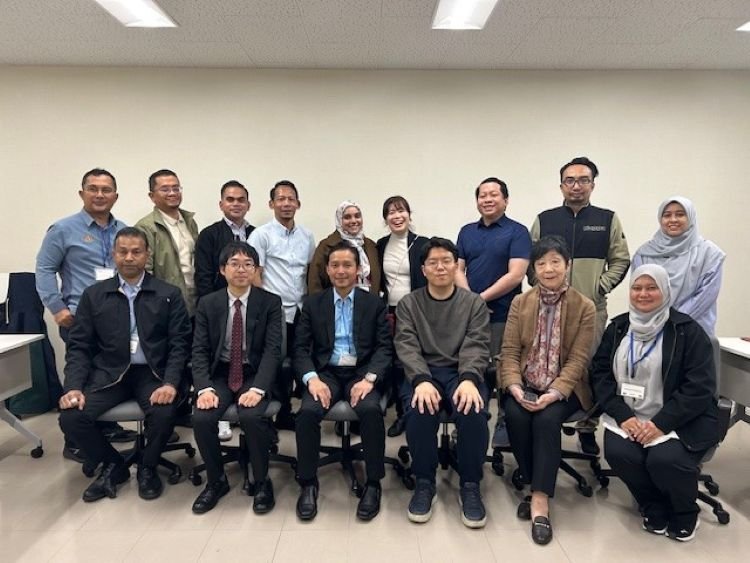
JICE conducted “Training Program on Sustainable Urban Development (Urban Regeneration and Smart City Development)” at the request of the Ministry of Housing and Local Government of Malaysia (KPKT) from November 17 to 21, 2025.
The Malaysian Ministry is responsible for formulating policies on sustainable urban development, urban regeneration, and smart city development in compliance with the country’s national development strategy: the Five-Year Plan 2026–2030. Against such background, they had commissioned JICE to plan, organize and conduct the training program with the aim of learning from Japan’s policies and good practices and exploring the possibility for applying such knowledge and experience in Malaysia.
The participants represented three divisions responsible for urban development—the Urban Sustainability Division, Urban Planning Division, and Solid Waste Management Division. In designing and managing the program, we selected most appropriate lecturers and arranged matching site visits based on the specific needs of each division.
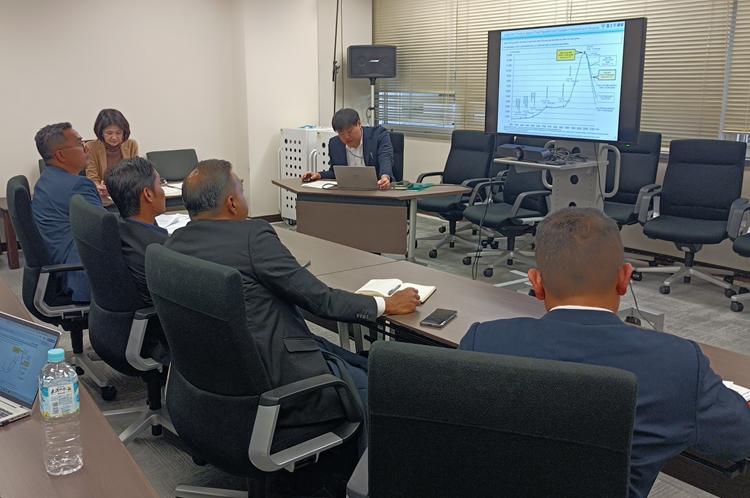
The program opened with a lecture by Dr. NAKAJIMA Hiroki, Project Lecturer at the Graduate School of Engineering, The University of Tokyo, who provided an overview of Japan’s urban development history and outlook. Before the lecture, the participants presented the challenges faced by their respective divisions and engaged in a discussion with the lecturer afterwards. It was followed by the visits to the Ministry of Land, Infrastructure, Transport and Tourism (MLIT) and the Tokyo Metropolitan Government, where they learned about national and local policies on urban regeneration and urban resilience in the context of population decline and natural disasters. As Malaysia has recently experienced frequent flooding due to climate change, they asked many questions about Japan’s urban development strategies designed to address earthquakes, typhoons, and floods. They also familiarized themselves about the smart city initiatives leveraging public–private–academic collaboration, including examples that apply AI and data for disaster prevention, urban mobility, and land-use management.
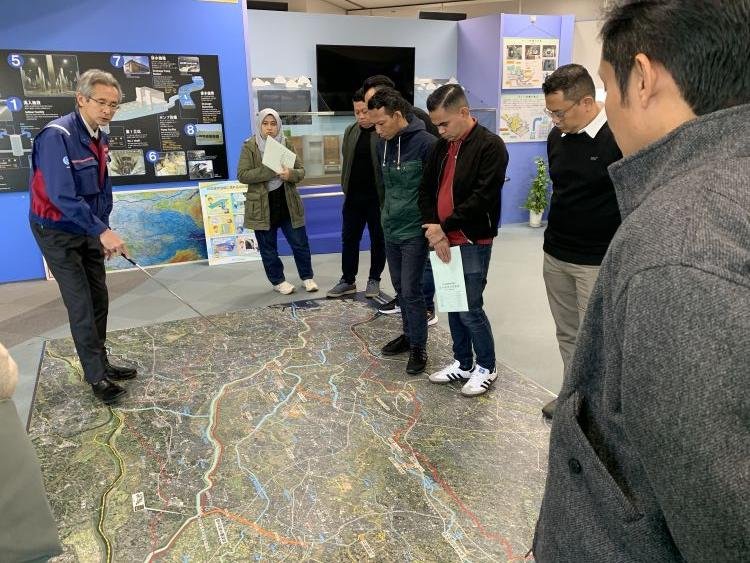
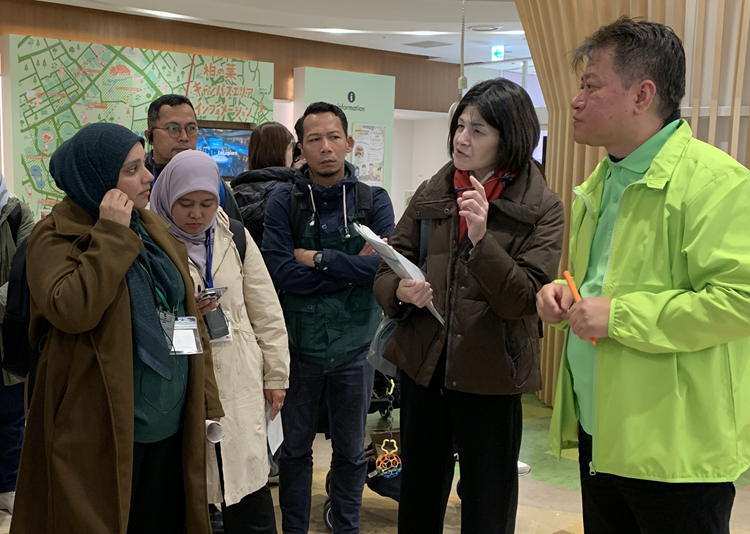
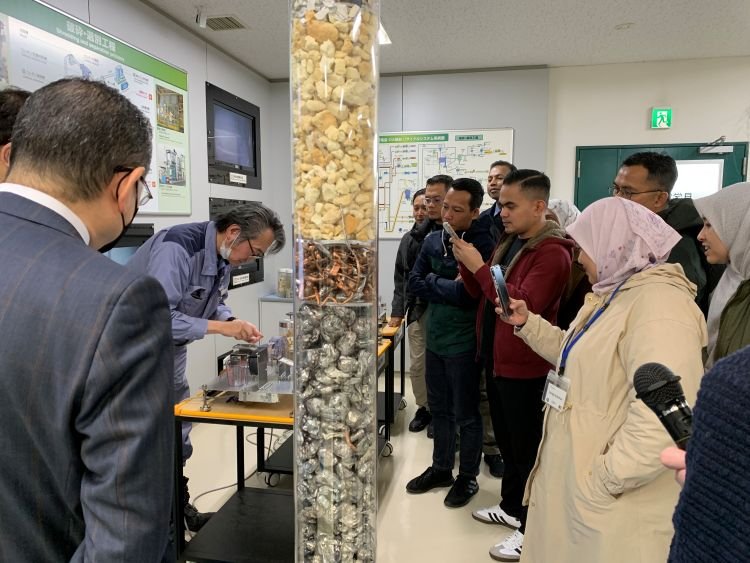
The Malaysian participants visited the Metropolitan Area Outer Underground Discharge Channel, a key facility that mitigates flood risk and strengthens metropolitan resilience, as well as a home appliance recycling plant (JFE Urban Recycle Corp.), which served as a model of private-sector engagement in waste management—an essential issue for large urban populations. They also visited Kashiwa-no-ha Smart City in Chiba Prefecture, a smart city model project selected by MLIT. Through these matching visits, they learned firsthand how the policies introduced in the lectures are put into practice by the government agencies, local authorities, and private companies. A participant commented, “We not only learned about urban development policies but also acquired firsthand knowledge of the successful models of sustainable cities.”
As it was the first time that JICE worked for KPKT, we planned the training program carefully ascertaining the participants’ backgrounds and interests as well as the organizational challenges they face through exchanges of views with the relevant officials, placing emphasis on advance dialogue to maximize the outcomes of the training.
The participants came from multiple departments but by incorporating content that addressed the specific needs of each department, we were able to conduct a practical and effective program, even within the short schedule of five days.
After the program, we received highly positive feedback regarding both the clarity of the content and its applicability to their practical work.
JICE’s strength lies in designing and implementing training programs flexibly according to the circumstances of each country and organization as well as the diversity of the participants, and this program served as one such example.
Looking forward, we will continue contributing to development of various countries and the building of partnerships with them through high‑quality human resource development that responds sharply to their respective needs.
Mizuho KOMATSU
International Training Division
International Training Department